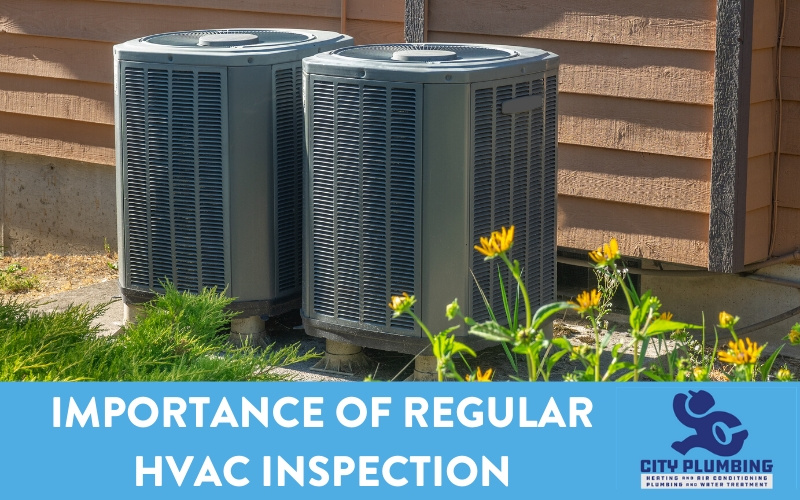
air conditioners ready for a spring hvac inspection

Importance of Regular HVAC Inspection

In our last post, we discussed some basic things you can do to maintain your HVAC unit. We also talked about things the experts at City Plumbing can do. In this post, we are expanding on that theme: Why regular HVAC inspection is necessary and a benefit to you and your home.

HOW OFTEN?

How often is it really necessary to get your HVAC unit checked out? A general rule is once a year. Just a once-over to make sure everything is in working order. Ideally, you’ll check it twice a year…around the times the season changes. So in the fall when you switch from air to heat, and in the spring when you switch from heat to air. Of course, if you notice something wrong, have City Plumbing check it out right away!

WHY CHECK?

Looking for a reason to get your system checked out? Here are just a few:

  • Air conditioners: They collect dirt, dust, and debris. You can clear the area around your external unit to keep it running efficiently.
  • Make it last: Getting your HVAC maintained regularly will increase its overall lifespan. 
  • Preventive maintenance: A routine maintenance check could catch something that would have turned into a bigger problem. Damage can be hard to spot if you’re not looking for it regularly.
  • Electric bill: Regular maintenance will not only keep you comfortable, but it will also keep your electric bills low.
  • Condenser: This is a critical component of your HVAC, and failure to run properly could cause big problems.
  • Drainpipe: Along with the condenser, if your drainpipe is blocked, this can cause significant water damage to your home. A simple check can detect and fix the problem.
  • Air quality: A clean HVAC will have a significant, positive impact on the air quality in your home.
  • Avoid expenses: Routine maintenance can help avoid expensive repairs in the future.

Are you ready to let us give you peace of mind by checking out your HVAC unit? Give us a call at 432-366-2401 to schedule an HVAC inspection today. Give us a call, and we’ll come running!

Man performing regular HVAC maintenance on air conditioner

Regular HVAC Maintenance

There is so much you can do to keep your home in good shape. Regular HVAC maintenance is no different. There are some easy things you can do to keep your heating and air conditioning running smoothly for years to come.

HVAC Maintenance Tips

Here are some pointers to help you stay comfortable:

  • Change your air filter every three months
    • If you have an electrostatic filter, it can be washed
  • Clean the area around your A/C unit outside your home by removing leaves and other debris
    • You can even spray it down with a hose to clear away dirt and dust
  • Make sure registers in your home are not blocked by rugs or furniture

Maintenance For The Pros

You can probably take care of the above pointers on your own. Some other tasks may require a professional to ensure quality maintenance. City Plumbing has the tools and expertise to do these kinds of HVAC jobs:

  • Electrical connections: Tightening loose connections not only make them work better, but are also safer, as they can prevent an electrical short.
  • Condensate drain: A/C units can produce a lot of condensation while they are running. Most units have a pan to catch the runoff, and then are piped out of the home. If this pipe gets clogged, it can cause significant water damage to your home.
  • Moving parts: As with anything mechanical, lubrication of moving parts will prevent overheating. This will help keep your unit running smoothly and efficiently, and keep your bills low.
  • Blower: If your blower is dirty or needs adjustment, it can really cut into efficiency. When it’s properly adjusted, you’ll be able to tell the difference in your home.
  • Refrigerant: A/C units need something to keep them cool, but you have to have the right type and the right amount to be as effective as possible. If there’s a leak in the system, you could be losing some of the cool that you’re paying for.
  • Fuel lines: Gas or oil lines can be extremely hazardous if not connected properly. Make sure to have a pro check them out!

City Plumbing is here and ready to help you with all your plumbing and HVAC maintenance needs. You can make an appointment today by calling 432-366-2401 or scheduling one online. Give us a call, and we’ll come running!
strange sounds from water heater keeping woman awake at night

Strange Sounds From My Water Heater

Ever worry about hearing a bump in the night? Sometimes those strange sounds that keep you up could be coming from your hot water heater. Compared with other appliances, your HWH is one of the busiest! It’s constantly working to make hot water available at the turn of a faucet. In most cases, you only notice it when something’s wrong.

POPPING SOUNDS

This is a common culprit in West Texas. Mineral build-ups from hard water can cause the hot water heater to make popping, clanking, or cracking noises. The sediment can build up in your tank and really hurt its efficiency, costing you money! City Plumbing’s experts can do a routine clean of your HWH about once a year to prevent any problems.

HISSING SOUNDS

Electric water heaters may be prone to a hissing sound. The culprit is the same – mineral build-up from hard water. The heating devices that warm up the water will hiss if covered with sediment.

BANGING SOUNDS

If your hot water heater is making loud banging sounds, call City Plumbing immediately! This is likely a problem with the burner, and could mean a damaged gas valve. That’s a dangerous combination, and could result in an explosion if not handled right away. Another possible reason for a banging sound could be if your HWH expands due to a large volume of water. Calling a plumber is a good way to make sure and stay safe.

WHISTLING SOUNDS

Screeching or whistling sounds should be easy to fix. It’s likely a loose water valve. You can check this yourself and adjust. Another possible culprit is the exhaust flue, which can also be adjusted. 

CLICKING SOUNDS

Ticking, clicking, and tapping sounds are generally considered normal. If they are loud or bothersome, have City Plumbing check the piping that goes to and from your HWH.

PHONE DIALING SOUNDS

This is the sound of calling City Plumbing to schedule an appointment at 432-366-2401. You can also schedule an appointment online. We’ll take a look at your hot water heater, and make sure you stay safe, warm, and protected from strange sounds for years to come! Give us a call, and we’ll come running!
kitchen sink with low water pressure

Water Pressure

There’s nothing like coming home after a hard day and relaxing in a long hot shower. But not all showers are created equal. Even if the water’s warm – and stays warm – your shower could still be missing something. If your shower doesn’t have good water pressure, you may still get clean, but the experience will suffer.

In this post, we’ll examine some of the things that can cause low water pressure, and how you can improve it.

LOSING PRESSURE

A variety of factors can potentially cause your home to lose water pressure. The most typical is old or leaky pipes. If water is leaking where it shouldn’t, that means it isn’t getting to your faucet or showerhead and thereby weakening the pressure.

Another common (and easy) fix involves valves that aren’t fully open. You can check your home’s water shut-off valves yourself. Just make sure they’re fully open for maximum water flow.

THE TEST

Though it may be most noticeable in the shower, low water pressure typically manifests itself in all of your faucets. That means showers, sinks, and even outdoor spigots where you would attach a hose.

Those outdoor spigots are where you’ll need to test the pressure. This can be done by hiring a professional or using a pressure gauge. If using a gauge, just turn the water up all the way. The pressure should read between 45 and 55 psi. A psi above 55 could be damaging to your pipes and faucets.

If your valves are adjusted properly, and your pressure is still low (around 40 psi), then it’s likely that your water provided by the city just isn’t that strong. 

If you’re having an issue with water pressure, give City Plumbing a call today. We’ll investigate the causes and figure out a practical solution that works for you and your home. Set up an appointment online or by calling 432-366-2401. Give us a call and we’ll come running!

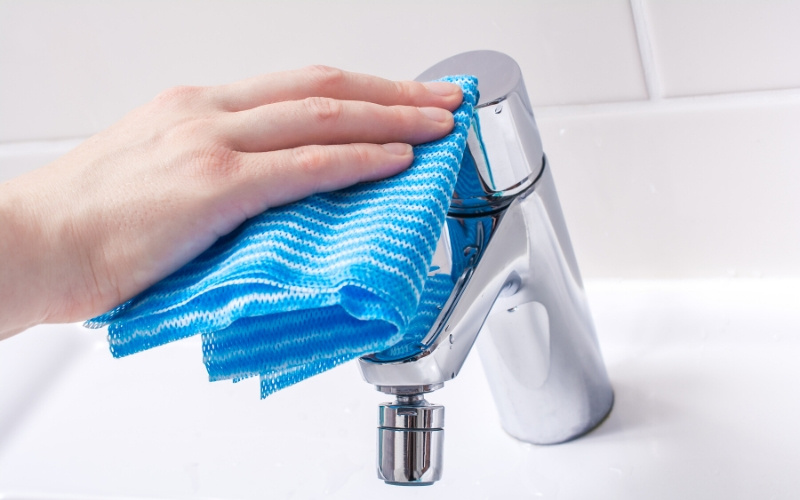
wiping a faucet dry to prevent hard water stains

Preventing Hard Water Stains

One of the most common complaints about tap water in West Texas is that it’s “hard water”. That means various minerals seep into the flow while it’s on its way to your faucet, which slightly alters the water’s molecular structure. While “hard water” isn’t necessarily dangerous to drink or use for bathing, it does have some side effects. These can include a bad taste and smell, and it can also leave stains in your bathroom and kitchen.

In today’s post, we’ll discuss ways you can prevent those hard water stains from occurring, and offer some solutions that City Plumbing can provide.

DRY SURFACES

One of the places where you’ll often see hard water stains are places where water was left to dry on a countertop or inside a shower. When the water evaporates, it leaves behind those extra minerals, which result in a film covering the area. This is commonly called soap scum, when combined with soap.

The easiest solution is simply to thoroughly dry areas after use. Just use a dry towel to wipe away the water before it dries.

WATER SOFTENING DETERGENT

The same way hard water can leave mineral deposits in your sinks and showers, it can also have an impact on your clothes. After washing a load of laundry in hard water, your clothes may be clean, but those extra minerals can build up on the clothing fibers, making them feel stiff.

Certain detergents and other water softening powders and liquids provide a solution. They change the chemical makeup of the water and protect your clothes from damage, even after dozens of washes.

WATER SOFTENER SYSTEM

To take care of your whole house at once, you could consider a water softener system. City Plumbing can test your water and come up with a water treatment plan that works for you. Water softener systems use a process called ionization to remove minerals from your water supply before they reach your faucet. Give City Plumbing a call at 432-366-2401 or schedule an appointment online. Give us a call, and we’ll come running!

Making Sure Your Plumbing Survives The Holidays

Thanksgiving is over! But with the holidays in full swing, plenty more feasts are still to come. Did you know the day after Thanksgiving is typically the busiest day of the year for plumbers? In this post, we’ll explain how to prevent a back-up after any of your feasts this holiday season.

PROTECTING YOUR PLUMBING

You probably know some basic rules of keeping your plumbing running smoothly. Don’t put turkey bones down the garbage disposal. Don’t pour grease down the sink. These are obvious solutions for most of the year, but after a big meal and dozens of dishes in your sink, it can be easy to let things slide. Don’t let it happen, and keep your sink safe by not letting these items down the drain:

  • Kitchen oil, of any kind
  • Butter (any kind of dairy can harden and clog up your pipes)
  • Eggshells
  • Bones (turkey, chicken, steak…anything!)
  • Tough vegetables (this can include things like celery – the strings can stop up the gears in your disposal)
  • Coffee grounds
  • Grease and greasy foods
  • Pasta, including rice (it can expand in your pipes and cause problems)
  • Non-food items

CLEANING UP

Issues can arise when any of these items end up going down your sink. Your garbage disposal will not dissolve anything and everything you stuff down it.

Here are a couple of simple tips:

  • Scrape food from plates and other dishes into the trash.
  • Thick, greasy foods (things like gravy are notorious for clogging sinks) can be wiped out with a paper towel and thrown away to avoid going down the drain.
  • Once you’re done cleaning the kitchen, boil some water, and pour it down the sink. This will help loosen up the gunk that found its way down there.
  • Every three months or so, pour some vinegar down the drain – this is good for routine maintenance.

NEED TO CALL US?

Should your drain get stopped up during the holidays or any day, City Plumbing is here for you. Give us a call at 432-366-2401. Give us a call, and we’ll come running!

Gas Line Inspections

Does your home use gas or electricity? If you don’t know for sure, don’t worry – many homeowners know just enough to hit the switch and have the lights come on. Here in West Texas, natural gas is a part of our lifeblood. If it’s how you heat your home, cook meals, or get hot water, you’ll need to know when something’s wrong. A damaged or leaky gas line can be detrimental to your home, and potentially harmful to your health.

GAS LINE LEAKS

So how do you know if there’s a leak in your gas line? Just like water lines, gas lines have a lifespan. They are susceptible to corrosion and breakage over time. A leak in the line could make you sick, cause a fire, or even an explosion. That “rotten egg” smell could be a clue that a line is busted.

PREVENTION

Thankfully, gas leaks are relatively rare. They can happen from careless digging, improper installation, or general wear and tear. The best way to prevent issues from arising is to have your lines checked by an expert every year.

CARBON MONOXIDE

One of the scariest parts of a gas leak is the threat of carbon monoxide. CO is an odorless gas that can be deadly, even if only inhaled for a short time. Because it’s odorless and tasteless, a special meter is needed to detect it. Anything that uses natural gas could potentially be a threat of CO. Having your HVAC and hot water heater inspected annually, along with other appliances,  will help keep you and your family safe.

HOW WE CAN HELP

At City Plumbing, we check your gas lines inside and outside your home to catch any potential problems before they get worse. We can detect even trace amounts of gas with our specialized equipment. If we find anything wrong we can advise if you need a repair or a full pipe replacement. To make an appointment with City Plumbing, call 432-366-2401. Just give us a call, and we’ll come running!

How Long Will My Plumbing Last?

Nothing lasts forever. Everything has a lifespan. It’s a reality that the earth is always aging. At some point, everything needs to be replaced…including your plumbing fixtures. But how long should they last? In this post, we’ll take a closer look, and even offer some tips to help your plumbing last longer!

PLUMBING LIFE EXPECTANCY

Here’s a list of how long many general plumbing components should last:

Waste Pipes: PVC pipes should last 50-80 years, Cast-Iron 50-60 years, clay 50-60 years

Kitchen sink: Acrylic sinks 50 years, enameled steel 5-10 years, soapstone 100+ years

Bathtubs: cast-iron 100 years, fiberglass 20 years

Faucets: 15-20 years

Gas lines: black steel 75 years, flex 30 years

Instant water heater: 10 years

Water lines: plastic 75 years, copper 50 years, plastic 50 years

Sewer grinder pump: 10 years

Shower doors: 20 years

Showerhead: Can last 100 years or more if cleaned regularly

Sump pump: 7 years

Toilet tank components: 5 years

Vent fan: 5-10 years

Vessel sink: stone, glass, porcelain, copper 5-20+

Hot water heater tank: 6-12 years

Water softener: 20 years

Well pump: 15-20 years

Whirlpool tub: 20-50 years

VARIABLES

Like with anything, there’s a degree of variability depending on the quality of your products. Dirt, rust, minerals, and hard water can shorten the lifespan of pipes and fixtures. This can especially impact water heaters and showerheads. The finish can also have a significant impact, and may require harsh cleaners that can shorten life expectancy. Some fixtures could last longer than others, so consider that when evaluating each part’s expected lifespan.

HOW WE CAN HELP

When the time comes to get your plumbing replaced, you can rely on City Plumbing to get the job done right, on time, and at a fair price. Give us a call at 432-366-2401 today and we’ll come running!

When To Replace Your Pipes

In the last blog, we explored some questions regarding how long pipes are supposed to last. The types of pipes used in your home can have a significant impact on how long they’re predicted to last. Visit the previous blog for details!

We also talked about opportune times to replace your pipes, such as it being a good idea to get pipework done during the remodeling process.

WARNING SIGNS THAT YOU MIGHT NEED TO REPLACE YOUR PIPES

Today, we are going to discuss some of the symptoms of rotting or leaking pipes, which are situations when you’ll want to call City Plumbing as soon as possible. Some pipe types, like cast iron, should last from 75 to 100 years. Unfortunately, things like pipe joints, fittings, and other factors that go beyond the material of the pipe itself can cause life expectancy to vary greatly.

Leaks, cracks, and corrosion are all signs of faulty plumbing. That means any sort of water damage in your home should be a warning sign. Signs of a leak can include water, water stains or even just damp areas (especially if there’s dampness around appliances or sinks). Water damage and warped flooring could also be evidence of a leak. If water damage stains appear to be rust-colored, that can be further proof of corroded pipes.

Low water pressure (and we know you’ll notice if it’s in the shower!) can be a sign of a clog. If you hear a gurgling sound from your drain, that’s a bad sign too.

SOLUTIONS

One of the tricky things about knowing when to repair or replace your pipes is that you can’t see them! When it’s time to inspect them, it’s necessary to call an expert. City Plumbing will do what it takes to detect the problem. Whether it’s looking for damp areas in your crawl space, or snaking your drain, we’ll find out what’s causing the issues with your plumbing. And at City Plumbing, we do it at a reasonable price. When you spot an issue, give us a call at 432-366-2401 and we’ll come running!

How Long Do Plumbing Fixtures Last?

You live in a brand new house. Or it’s 10 years old. Or it’s 20 years old. Or it’s 50 years old. You’ve made some cosmetic upgrades over the years, but have been putting off any major plumbing work. Is now the right time? Let’s take a look.

AVOIDING DISASTER

Some disasters can be worse than others. Plumbing is potentially one of those. If your carpet wears out, you replace it, no big deal. But if a pipe bursts, you’ve got some major problems, and some major costs. That’s why it’s important to keep your pipes and plumbing updated.

PLUMBING DURING RENOVATION

We often don’t think about internal plumbing because we don’t see it. The pipes are hidden underground, in the crawl space, or behind the wall. Sometimes the best time to replace existing plumbing is during renovations. If you’re getting a new bathtub, kitchen cabinets, or bathroom vanity, that can be a great time to get plumbing work done as well. The pipes will likely be more exposed, and easier to access and replace.

AGE OF PIPES

Every family has a unique situation: relatives, kids, budget, housing, even the weather patterns in the area where you live. Depending on your situation, you might be inclined to put off expensive repairs as long as possible. So when do they become really necessary? 

Here’s a guide to how long your pipes should last based on the material they’re made from:

Copper (50+ years)

Brass (40-45 years)

Cast Iron (75-100 years)

Galvanized Steel (20-50 years)

PVC (50-70 years but, if properly maintained, they can potentially last indefinitely!)

If you’re not sure what kind of pipes you’ve got, just check the inspection report from when you bought your home.

THE SOLUTION

In our next blog post, we’ll go into more details about some of the signs you can look out for to determine when you really need to get those pipes replaced. If you think it’s time, City Plumbing is here for you. Give us a call, and we’ll come running. Call us today at 432-366-2401.